


What Is Kiln-Dried Wood, and Why a Real Wood Table Should Always Start There
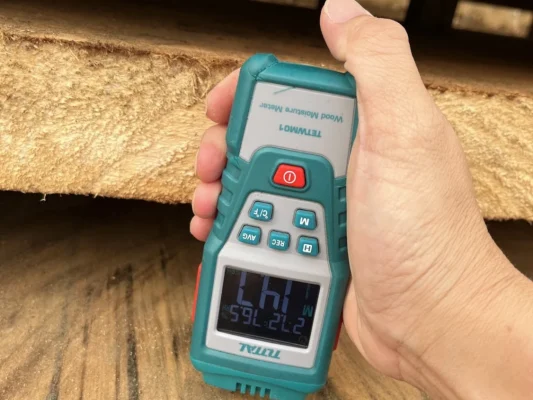
When people shop for a solid wood table, especially a single-slab one, they usually look at the type of wood, the grain, the thickness, or the size of the slab first. That makes sense, those are the things you can actually see in a photo or when you walk into a showroom.
But there’s something you can’t see in any photo that matters more for the table’s long-term life: the moisture still sitting inside the wood.
Wood is still, in its own way, a living material. No matter how long ago it was cut from the tree, it keeps absorbing and releasing moisture depending on the air around it. If a slab that’s still fairly wet gets built into a table right away, the wood will keep drying out on its own over time, and as it does, its shape shifts along with it.
That’s where most of the classic solid-wood-table problems come from: slabs shrinking, tabletops cupping or bowing, warping, cracks showing up at the ends or down the middle, joints and fittings working themselves loose after a while.
Because of that, before real wood ever becomes furniture, it needs to go through a step called kiln drying.
So What Exactly Is Kiln-Dried Wood?
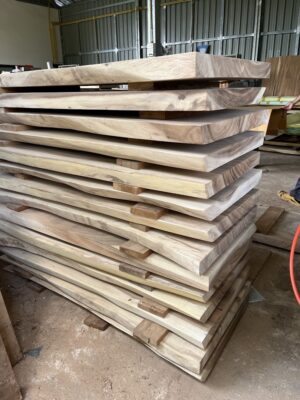
Put simply, kiln-dried wood has had its moisture reduced under controlled conditions, temperature, humidity, and airflow are all managed on purpose.
The goal isn’t to get the wood bone dry. It’s to bring the moisture down to a level that’s right for actual use, and more importantly, to let the wood do most of its major shrinking before it becomes a table, not after.
Freshly milled wood still holds a lot of water. As that water slowly leaves, the wood’s dimensions naturally shift with it. If a table gets built first and that shift happens afterward, the customer who bought it is the one who ends up dealing with the movement. But if the moisture is brought down and the wood works through most of that change before production even starts, the team can cut, plane, and assemble it much closer to the condition it’ll actually live in.
Why Wood That Hasn’t Dried Properly Tends to Crack, Warp, or Bow
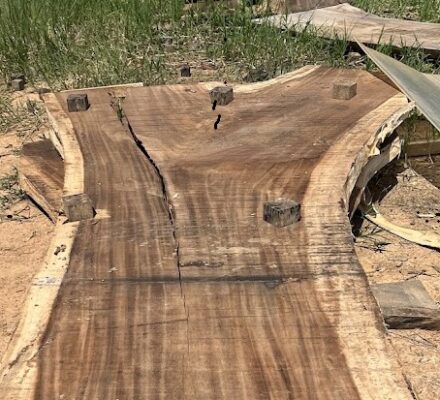
Picture a slab that’s still quite wet inside. Once it’s sitting in a home with drier air, that moisture starts working its way out. The catch is that wood doesn’t shrink evenly in every direction, and different parts of the same slab dry at different speeds — the outer surface usually dries faster than the core, and some areas shrink quicker than others. That uneven pull is exactly what causes bowing, warping, and cracking.
This matters even more with a single-slab table that’s wide and thick, because the whole piece is one continuous slab of wood — it’s not cut into smaller strips and joined together in a way that’s easier to keep in check.
Does Kiln-Dried Wood Mean It’ll Never Crack or Warp?
No. If someone tells you kiln-dried wood never cracks, take that with a grain of salt.
Real wood keeps responding to humidity in the air no matter how well it was dried. When the moisture around it changes, the wood still absorbs or releases a little and moves slightly. Kiln drying doesn’t stop that movement forever, what it does is get the big changes out of the way before production, and cut down the risk of building with wood that’s still too wet.
So the real question isn’t “will kiln-dried wood crack?” It’s whether the wood was brought down to an appropriate moisture level before it was built, and whether the maker’s design actually accounts for the wood’s natural movement. Both of those have to be true together.
Kiln-Dried vs. Air-Dried: What’s the Difference?
Wood can dry a few different ways. Air drying relies on the surrounding air to slowly pull moisture out, and it works, but how fast it dries and how much moisture is left at the end depends on the weather, how long it’s been drying, the thickness of the wood, how it’s stacked, and how well air can move through it. Kiln drying uses much more controlled conditions, so the whole process can be managed far more precisely.
For thick or large slabs especially, the question isn’t just whether the surface looks dry. What matters is the moisture still trapped inside. A slab can look completely dry on the outside while still holding a lot more moisture in the core than you’d guess just by looking. Once it’s planed or finished, that hidden moisture can still cause changes down the line.
One More Question Worth Asking Before You Buy
When shopping for a solid wood table — especially a rain tree (suar) single-slab table — most people ask “is it real wood?” or “how many inches thick?” Those matter, but it’s worth adding one more: “was this slab dried before it was built?” And if the conversation allows for it, ask how the maker checks the wood’s moisture before turning it into a table.
Two slabs of the same species, the same size, that look nearly identical in photos can behave very differently once they’re in use, if their internal moisture levels weren’t the same to begin with.
What We’ve Learned Making Single-Slab Rain Tree Tables at Blue Sea Wood
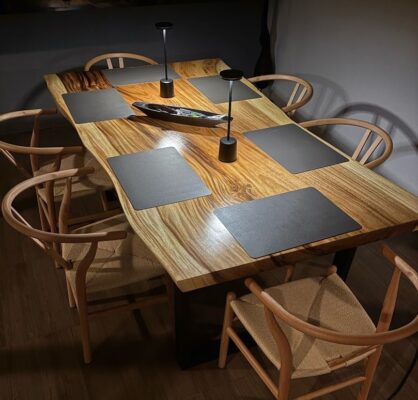
At Blue Sea Wood, single-slab rain tree tables are our main line of work, and one thing we’ve learned over time is that managing a slab’s moisture has to start before production begins, not after the table’s already built and something’s gone wrong.
Every slab goes through kiln drying before it enters production. Only after that does the team select the slab, cut, plane, sand, finish, and assemble it to the customer’s design. The reason is simple: no two single-slab tables are alike. The grain, where the heartwood and sapwood sit, the shape of the natural edge, the width, the internal structure, every slab is different. We can’t make a natural material stop moving altogether. What we can do is control the factors that are actually within our control from the start, and moisture is one of the most important ones to get right before a table is ever built.
So Should You Only Buy Kiln-Dried Wood?
For solid wood furniture meant to last, especially large tables, we’d genuinely encourage putting real weight on whether the wood was properly dried before production. Not because “kiln-dried” is a marketing term that makes wood automatically better at everything, but because a piece of furniture should be built after the wood has already worked through most of its moisture loss, not before, leaving that process to play out later in someone’s home.
So next time you’re looking at a solid wood table, alongside size, price, and species, try adding one more question:
“Is this slab dry enough to be built into a table yet?”
That one short question might matter more for how long the table lasts than anything you can see in a photo.
Looking for a solid Suar wood table?
Blue Sea Wood tables are made from kiln-dried wood before production.
You can choose your actual wood slab, table size, edge style, and leg design.