


In today’s world of mass-produced furniture, there’s something profoundly satisfying about understanding the origin story of the materials that make up our living spaces. One such magnificent material is Monkey Pod wood, whose journey from tropical forests to finely crafted furniture represents both natural wonder and artisanal craftsmanship.
The Origins: Tropical Growth and Sustainability
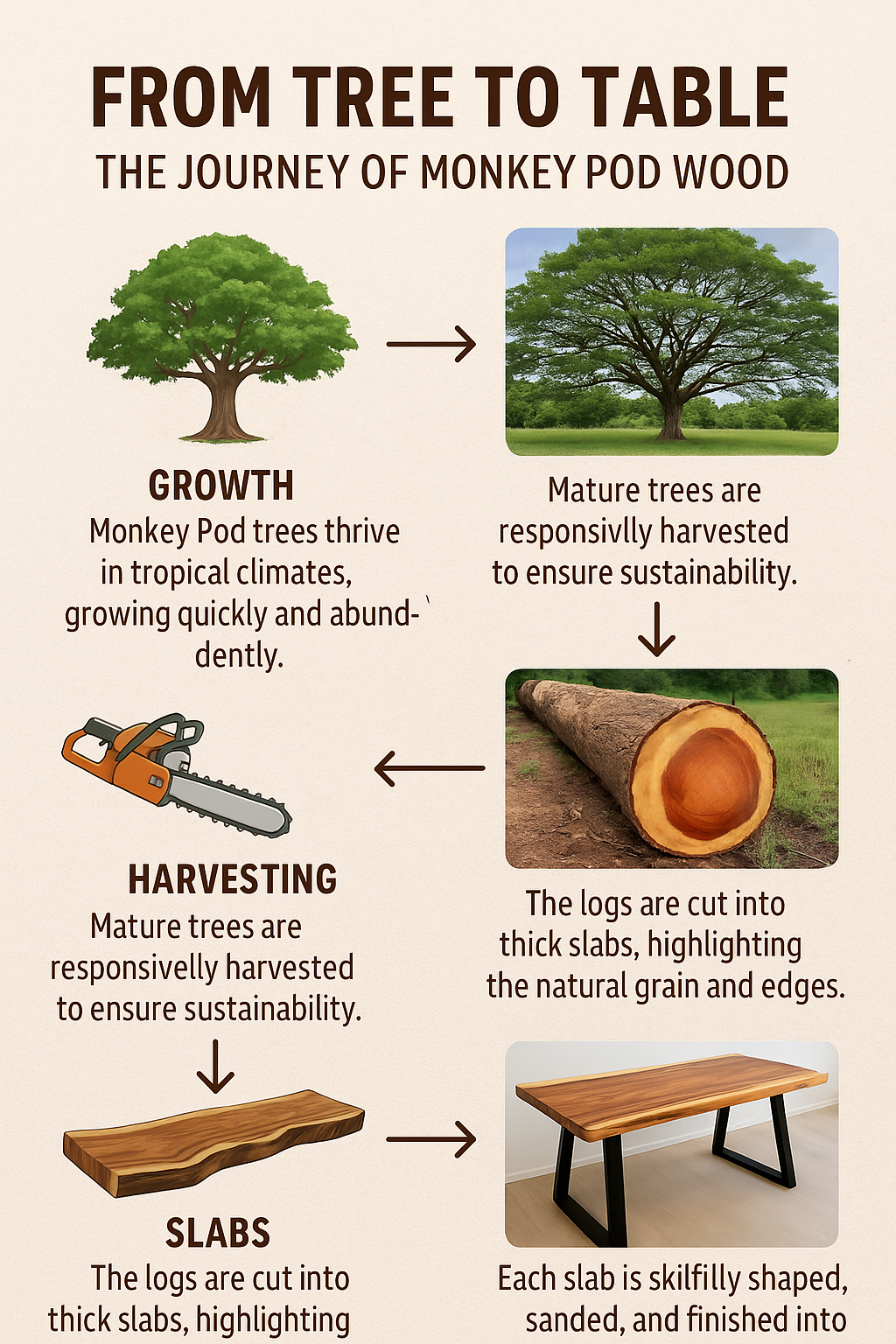
Monkey Pod trees (Albizia saman), also known as Rain Trees in some regions, thrive in tropical climates across Southeast Asia, South America, and parts of Hawaii. These majestic trees are remarkable for their broad, umbrella-like canopies that can stretch up to 80 feet wide, creating a distinctive silhouette against tropical skies.
What makes these trees particularly valuable from a sustainability perspective is their relatively rapid growth rate. In optimal conditions, Monkey Pod trees grow abundantly, reaching maturity faster than many hardwoods. This quick growth cycle makes them an increasingly popular choice for sustainable forestry, as new trees can be planted and grown while older ones are selectively harvested.
Responsible Harvesting Practices
The transition from living tree to raw material begins with thoughtful harvesting. Unlike clear-cutting operations that devastate ecosystems, responsible Monkey Pod harvesting involves selecting mature trees that have reached their optimal size, typically after 15-25 years of growth. This selective process ensures forest sustainability and minimizes environmental impact.
Modern harvesting operations use precision cutting techniques to fell trees with minimal damage to surrounding vegetation. The timing of harvest is also crucial – trees are typically harvested during dry seasons to reduce soil impact and allow for easier transportation of the heavy logs.
From Log to Slab: The Art of Processing
Once harvested, Monkey Pod logs reveal their true splendor. When cut, the wood displays a striking contrast between its golden-brown heartwood and lighter sapwood, often featuring dramatic grain patterns that tell the story of the tree’s growth.
The transformation begins with cutting the logs into thick slabs that preserve the natural edges of the wood – a style known as “live edge” that has become increasingly popular in contemporary furniture design. These slabs highlight the organic beauty of the wood, including any natural features like knots, burls, and grain variations that make each piece unique.
The freshly cut slabs undergo a careful drying process that can take months or even years depending on thickness. This critical step prevents warping and cracking later, ensuring the wood remains stable when crafted into furniture.
Craftsmanship: From Raw Slab to Finished Piece
The final stage of this remarkable journey involves skilled artisans who transform the dried slabs into functional art pieces. Each slab is meticulously shaped, often preserving the natural contours that give the wood its character. Careful sanding gradually reveals the wood’s hidden beauty, bringing out the depth and complexity of its grain patterns.
The finishing process typically involves multiple layers of oils or clear protective coatings that enhance the wood’s natural color while providing protection against moisture and wear. These finishes bring out the wood’s rich, warm tones and lustrous appearance that deepens beautifully with age.
The resulting furniture pieces – dining tables, coffee tables, benches, and more – showcase not just functional design but the natural history of the material itself. When you run your hand across a Monkey Pod table, you’re connecting with a living timeline: years of tropical growth, careful harvesting, patient processing, and detailed craftsmanship.
Why Monkey Pod Wood Stands Apart
What makes Monkey Pod particularly special among hardwoods is its combination of beauty and practicality. The wood features:
- Distinctive color contrast between heartwood and sapwood
- Dimensional stability once properly dried
- Medium hardness that balances durability with workability
- Natural resistance to some forms of rot and insects
- Sustainability compared to slower-growing exotic hardwoods
Living With a Piece of Natural History
Owning a piece of Monkey Pod furniture means bringing a slice of tropical forest into your home – a daily reminder of nature’s artistry and human craftsmanship. Each scratch, patina mark, and darkening of the wood over time adds to its character and story.
In an age of disposable furnishings, these solid wood pieces stand as an alternative philosophy – one that values longevity, natural beauty, and the connection between our living spaces and the natural world. A Monkey Pod table isn’t just furniture; it’s a living legacy that can be passed down through generations, carrying its origin story from tropical grove to family gathering place.
The next time you encounter a beautiful wood table with striking grain patterns and a warm amber glow, take a moment to appreciate the journey it made – from a seedling reaching toward the tropical sun to the centerpiece of a home, connecting us to both nature and craftsmanship in one remarkable journey from tree to table.